

Over 400 types of nerve cells have been created from stem cells

The human brain contains about 100 billion neurons, and these cells, as is known, do not regenerate. Therefore, it is so important to take care of your brain health from an early age, avoid exposure to toxic substances, and bad habits. Many diseases of the nervous system are caused by dysfunction or loss of a large number of nerve cells. For example, in Parkinson’s disease, neurons in a part of the brain known as the substantia nigra do not produce the neurotransmitter dopamine. In multiple sclerosis, the myelin sheath of neurons is damaged. Degeneration of nervous tissue is observed in Alzheimer’s disease, other types of dementia, and brain and spinal cord injuries. For many years, scientists have been trying to create methods for obtaining new neurons, but nerve cells are very diverse, and until recently, only a few dozen of their types could be obtained in vitro (“in a test tube”).


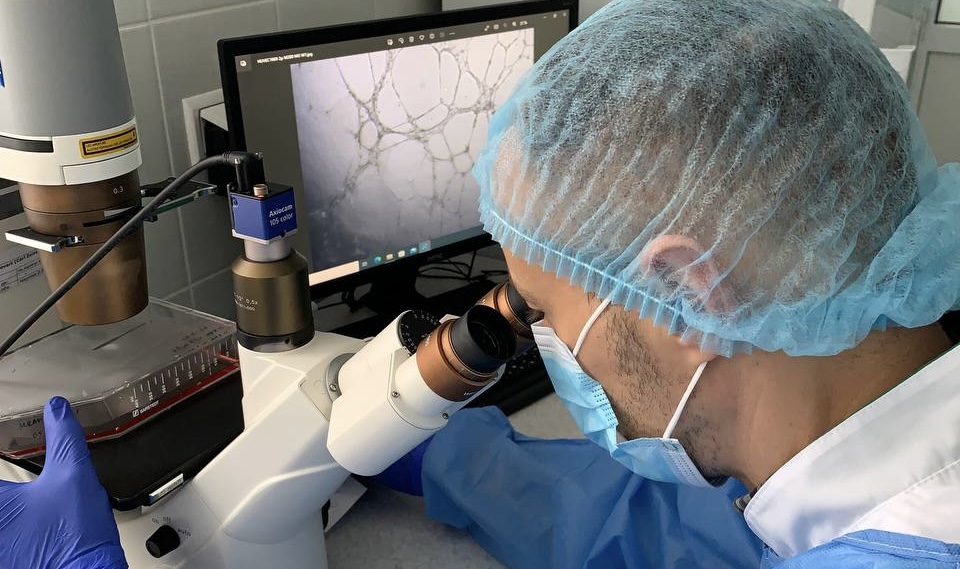
However, as reported by News Medical Life Sciences, Dr. Treutlein’s team has so far successfully obtained more than 400 types of nerve cells. Scientists worked with a culture of induced pluripotent stem cells, which were first generated from blood cells. Then, using genetic engineering, certain neuronal regulatory genes were activated in these cells. This was an extremely painstaking work, during which the scientists repeated more than 200 series of experiments.


Scientists hope that in the future the nerve cells created in this way can be used as a replacement cell therapy for neurological diseases. The neurons obtained in the laboratory are also important for experimental studies of Alzheimer’s disease, Parkinson’s disease, epilepsy, schizophrenia, sleep disorders, multiple sclerosis.

 

Source: https://www.news-medical.net/news/20250711/Researchers-create-over-400-types-of-nerve-cells-from-stem-cells.aspx

Stem cells against aging

Aging is an irreversible physiological process, genetically programmed in every living organism. However, in recent years, more and more publications have appeared in authoritative scientific publications that highlight approaches to improving the quality of life of older people and preventing diseases of old age, based on the achievements of modern cell biology and genetics. The fact that the development of medical science and sanitary and vaccination culture contributes to longevity is confirmed by the fact that in 1948, when the World Health Organization was founded, the average life expectancy in the world was barely 46 years, while today it is predicted that, for example, in China by 2035 the average life expectancy will reach 81 years.


The aging processes in the human body are largely due to a decrease in the functional activity of cells, in particular stem cells. The supply of the latter throughout a person’s life also steadily decreases, so the body’s ability to regenerate weakens, wound and fracture healing processes slow down. At the molecular level, the length of chromosome telomeres decreases with age. If we look at the chromosomes of umbilical cord blood stem cells collected at birth and cells of an elderly person under optical magnification, the former will differ primarily in longer chromosome telomeres. These molecular features determine the higher ability of umbilical cord blood cells to divide and transform into other types of cells, which can be used in regenerative and anti-age medicine schemes.


In July 2025, an article by Li He and co-authors appeared in the international scientific journal Frontiers of Aging, scientifically describing the mechanisms of the anti-aging effect of stem cells. Researchers note that these mechanisms are complex, but in particular they include the restorative effect of stem cells, their ability to regulate metabolic processes, reduce inflammation, and have an immunomodulatory effect. To date, it has been proven that stem cells injected into the heart can transform into cardiomyocytes, i.e. myocardial cells, restoring its structure and function. The regenerative effect of stem cells is also associated with their ability to secrete numerous growth factors that stimulate the growth and repair of other tissues.


In anti-aging therapy, mesenchymal stem cells are most often used, as evidenced by the analysis of 11 clinical studies conducted by the authors of the above-mentioned publication. The proven clinical efficacy of the drug of the bone marrow allogeneic mesenchymal stem cells in the treatment of senile weakness in the elderly is reported. There are more and more scientific publications that demonstrate the effectiveness of stem cells in treating unwanted skin changes caused by aging, as well as in treating baldness and eliminating other cosmetic defects.


The article is based on the data of the Association of Cryobanks and https://www.frontiersin.org/journals/aging/articles/10.3389/fragi.2025.1638168/full


Placenta extract is being studied for the treatment of diabetes

The placenta is not only a rich source of stem cells, which are increasingly used in clinical trials to treat autoimmune and severe inflammatory diseases and regenerative therapy (heart disease, nervous system, osteoarthritis), but also a treasure trove of valuable biologically active substances. The latter include numerous growth factors, anti-inflammatory cytokines, enzymes, vitamins, hormones and hormone-like substances. The Institute of Cell Therapy is one of the few cryobanks in the world that offers the service of manufacturing placenta extract to preserve the listed valuable substances, in addition to cryopreservation of stem cells. Placenta extract has long been successfully used in regenerative therapy and aesthetic medicine.


The August issue of the international scientific journal Tissue Cell published an article by Nehal Mohamed Eisa et al. (2025), which describes approaches to the use of placenta extract in the treatment of diabetes mellitus and demonstrates its effectiveness in experimental studies. Experimental animals with diabetes mellitus were administered placenta extract, mesenchymal stem cells or placenta extract and a mesenchymal stem cell preparation. A significant improvement in clinical parameters was noted in all groups of animals, the best results were observed with the simultaneous administration of placenta extract and mesenchymal stem cells. Scientists explain the therapeutic effect of this treatment method by the fact that mesenchymal stem cells were engrafted in the pancreatic tissue, and placenta extract stimulated their regenerative action by supplying important growth factors.


Source: https://pubmed.ncbi.nlm.nih.gov/40157219/


The Clinic of the Institute of Cell Therapy has over 15 years of experience in the therapeutic use of placenta extract in medicine and cosmetology (more about the healing properties of placenta extract at the link https://cryobank.ua/en/articles-en/placenta-extract/). Also, the Institute of Cell Therapy, jointly with the state institution “Institute of Endocrinology and Metabolism n.a. V. P. Komisarenko of the National Academy of Medical Sciences of Ukraine” (Kyiv, Ukraine) under the auspices of the Coordination Center for Organ, Tissue and Cell Transplantation of the Ministry of Health of Ukraine, conducted a clinical study “Effectiveness of the use of preparations of cryopreserved nucleated human umbilical cord blood cells, cryopreserved multipotent mesenchymal stromal cells isolated from human placenta and cryopreserved human amniotic membrane separately and their combinations in diabetic peripheral neuropathy, peripheral arterial disease and trophic ulcers of the lower extremities” (https://csict.com.ua/rnd-research-articles/effectiveness-of-cryopreserved-human-umbilical-cord-blood-nucleated-cells-ucb-tncs-cryopreserved-allogeneic-placenta-derived-multipotent-mesenchymal-stromal-cells-p-mmscs-and-cryopreserved-human/).